



CBD Myths vs Reality: Legality, Labels and Quality
24/10/2026
Cannabis and Driving in Thailand: What the Law Says
24/10/2026Last updated October 2026.
Open a jar of cannabis flower and the first thing you notice is the smell: lemon peel, pine needles, black pepper or ripe fruit. Most of that character comes from a group of natural compounds called terpenes. This guide looks at six terpenes that turn up often in cannabis, what each one smells like and where else in nature you have probably met it before.
At a glance
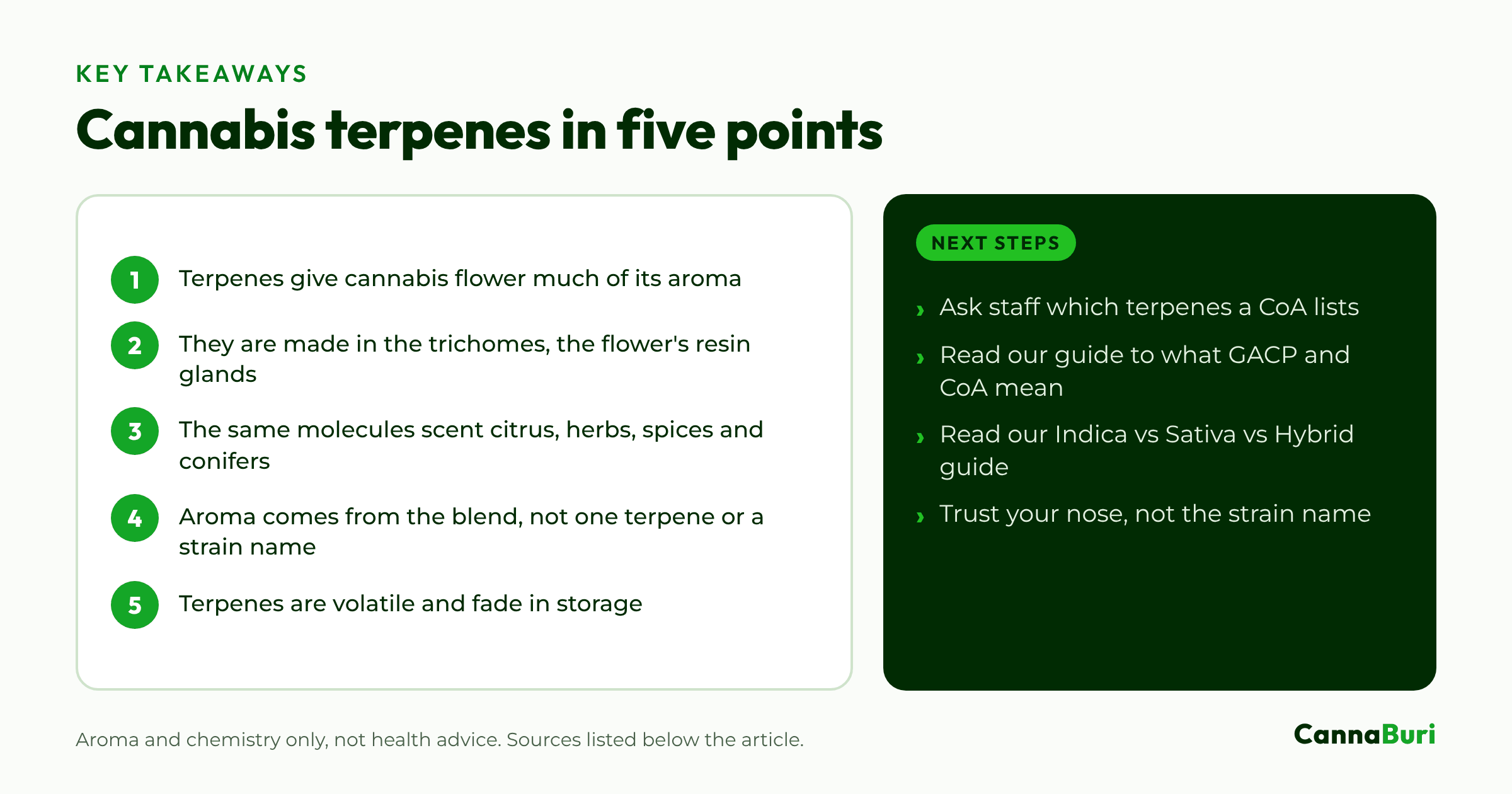
- Terpenes are natural compounds that give cannabis flower much of its aroma.
- They are made in the trichomes, the tiny resin glands on the flower.
- The same molecules scent citrus fruit, herbs, spices and conifers.
- Aroma comes from the blend, so a strain name is not always a reliable guide.
- Terpenes are volatile and fade over time in storage.
What are terpenes?
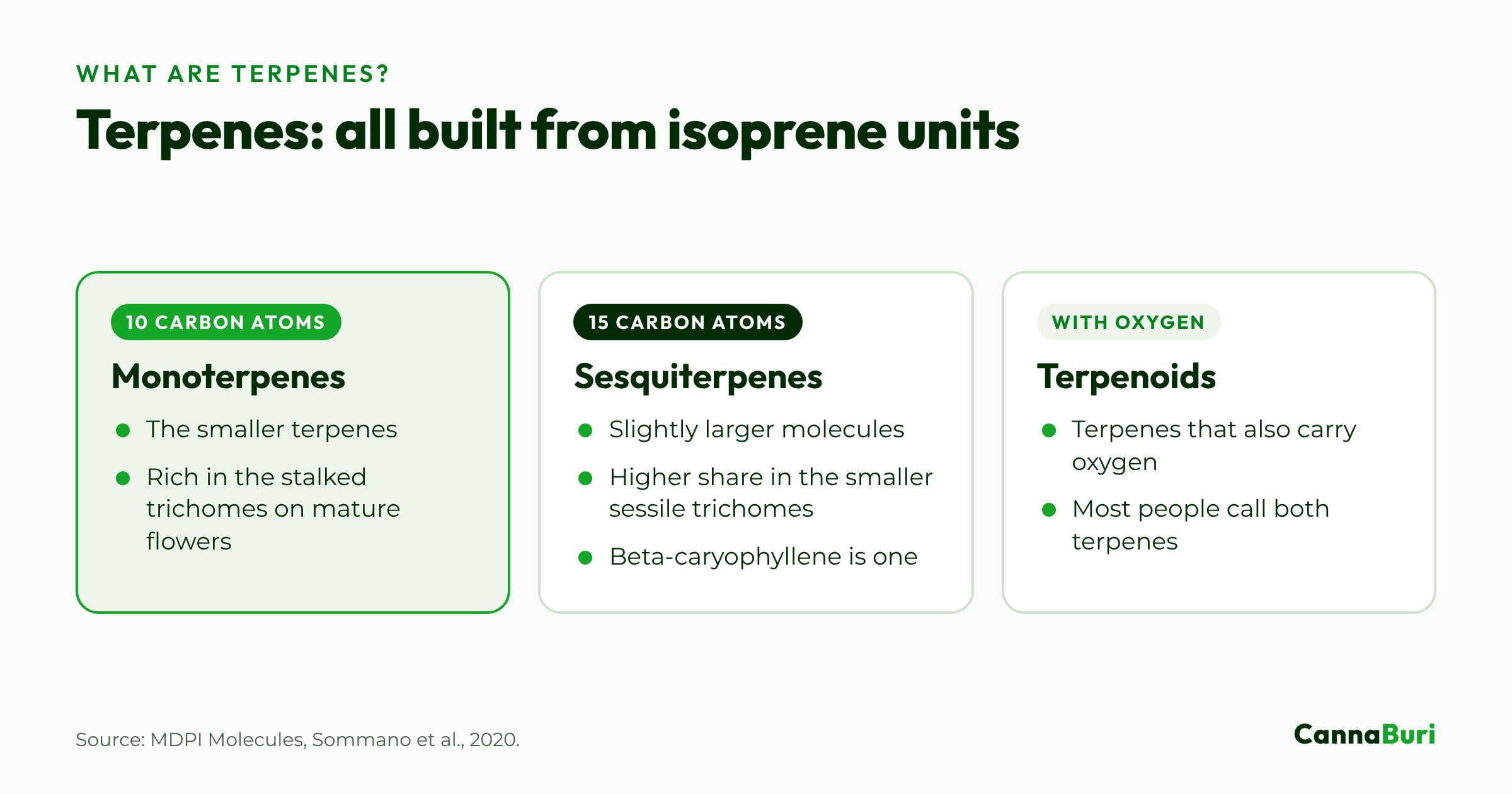
Terpenes are hydrocarbons built from small repeating units called isoprene. The smaller monoterpenes have 10 carbon atoms, while sesquiterpenes have 15. When a terpene carries oxygen as well, chemists call it a terpenoid, although most people use the word terpene for both.
In cannabis, terpenes are made in the trichomes, the tiny resin glands that give a mature flower its frosty look. A review of cannabis terpenes notes that the stalked trichomes on mature flowers are rich in cannabinoids and monoterpenes, while the smaller sessile trichomes produce higher proportions of sesquiterpenes.
Cannabis is far from the only plant that makes these compounds. The same molecules give citrus fruit, herbs, spices and conifers their scents, which is why the food and fragrance industries use many of them as flavourings and perfume ingredients.
Six common cannabis terpenes
Myrcene: musky, earthy and hop-like
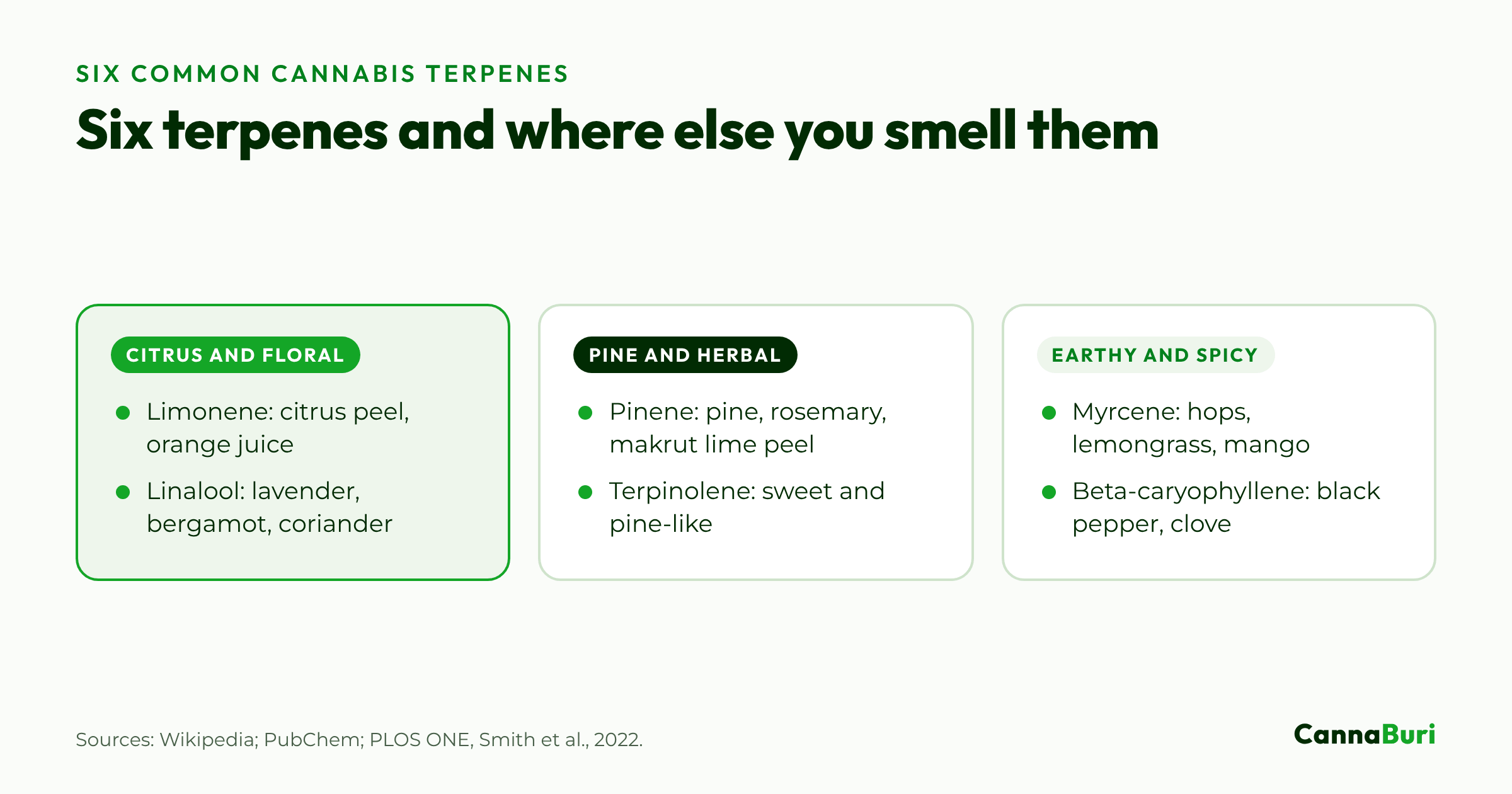
Myrcene is usually described as musky or hop-like. In beer it adds a peppery, balsamic note, which makes sense because hops are one of its most familiar sources. It is also found in lemongrass, mango, bay leaf, cardamom and wild thyme, so if a flower reminds you of a herb garden or a hoppy beer, myrcene may be part of the reason.
Limonene: bright citrus
Limonene is the main component of the essential oil in citrus peel and gives orange peel and orange juice much of their familiar scent. Its common form is described as citrus, orange, fresh and sweet. Food makers use it as a flavouring, and it also occurs in caraway, dill and the resins of many trees. Flowers with a sharp lemon or orange note often contain plenty of it.
Beta-caryophyllene: pepper and clove
Beta-caryophyllene is a sesquiterpene, a slightly larger molecule than the others on this list. It contributes to the aroma of black pepper and is a major part of clove oil. You will also find it in rosemary, hops, oregano, basil and cinnamon. A spicy, peppery or woody edge on a flower usually points towards caryophyllene.
Pinene: fresh pine
Pinene smells, as the name suggests, like pine. Alpha-pinene is described as the most widely encountered terpenoid in nature and is the main component of turpentine and of the liquid extracts of conifers. Pinene also appears in rosemary, basil, sage and eucalyptus oil. Closer to home, beta-pinene is one of the main components of makrut lime peel oil, the same lime used in so much Thai cooking.
Linalool: soft and floral
Linalool has a floral, slightly spicy and woody scent, often compared with lavender, bergamot or lily of the valley. More than 200 plant species produce it, including lavender, coriander, sweet basil, bay laurel and sweet orange flowers, and hops and cannabis are on the list too. If a flower smells gently floral rather than sharp or fuel-like, linalool may be in the mix.
Terpinolene: sweet, piney and herbal
Terpinolene is less often the leading terpene, which makes it easy to spot when it is. Flavour reference books describe its odour as sweet and pine-like. It was traditionally obtained from wood turpentine and is used today as a food flavouring and fragrance ingredient. A large study of lab data from the United States found that a terpinolene and myrcene profile formed one of the three main terpene groups among THC-dominant flowers.
Why aroma is about the blend
No flower contains just one terpene. That same United States study, which looked at more than 40,000 samples with terpene data, found most THC-dominant flowers fell into a few broad groups: one high in beta-caryophyllene and limonene, one high in myrcene and pinene, and one high in terpinolene and myrcene. Within each group, the smaller amounts of other compounds shape the finer details of the scent.
This is why two flowers with the same leading terpene can still smell quite different, and why a strain name is not always a reliable guide to aroma. Our Indica vs Sativa vs Hybrid guide explains more about the limits of those labels.
Aroma, not effects
You will find plenty of websites claiming that a particular terpene produces a particular effect. The evidence for these claims is limited, and research is ongoing.
One laboratory study tested myrcene, alpha-pinene, beta-pinene, beta-caryophyllene and limonene and found no data to support the idea that they act directly on the body’s main cannabinoid receptors, with the possible exception of a weak interaction for beta-caryophyllene. For that reason we describe terpenes by their smell and flavour only.
Nothing in this guide is health advice. If you have a question about cannabis and your health, please speak to a Thai-licensed medical practitioner.
Getting the most from the aroma
Three practical points are worth keeping in mind when you compare the aroma of different batches.
- Check the lab report: many certificates of analysis list the main terpenes measured in a batch. Our guide to what GACP and CoA mean explains how to read one.
- Remember that terpenes fade: they are volatile. In one storage study, average terpene levels in dried flower fell by more than half within four months, and ground flower lost more than whole flower.
- Trust your nose, not the name: batches of the same strain can smell different because growing conditions, harvest timing and handling all play a part.
Key takeaways
If you would like to talk any of this through, you are welcome to visit our store on Pattaya 3rd Road or contact the CannaBuri team with your questions. Our team can show you lab reports and talk you through the terpenes listed on them.
This article is general information, not legal or medical advice.
Sources
- MDPI Molecules: The Cannabis Terpenes (Sommano et al., 2020)
- Wikipedia: Myrcene
- Wikipedia: Limonene
- Wikipedia: Caryophyllene
- Wikipedia: Pinene
- Wikipedia: Linalool
- PubChem: Terpinolene, odour data
- PubChem: Terpinolene, use and manufacturing
- PLOS ONE: The phytochemical diversity of commercial Cannabis in the United States (Smith et al., 2022)
- Frontiers in Pharmacology: Terpenoids from cannabis do not mediate an entourage effect by acting at cannabinoid receptors (Finlay et al., 2020)
- Frontiers in Plant Science: Metabolic profiling of cannabis secondary metabolites for evaluation of optimal postharvest storage conditions (Milay et al., 2020)
